Sara Chisum
The GuiltySara Chisum enters the story as both a witness to her family’s history and a possible source of answers about her sister Janet Chisum’s death. Her youth, guarded behavior, and eventual killing make her brief appearance consequential: the investigation turns on what she knows, but reaches her before that knowledge can be fully recovered.
Identity and First Encounter
Sara is introduced as a very young woman, barely eighteen. She identifies herself as Janet’s younger sister, placing her at the center of an unresolved family tragedy. Her age gives particular weight to the burden she describes: after details about Janet emerged at trial, Sara had to testify against her own father, believing the evidence meant he had killed Janet. The jury did not convict him, leaving the family with suspicion rather than a legal resolution.
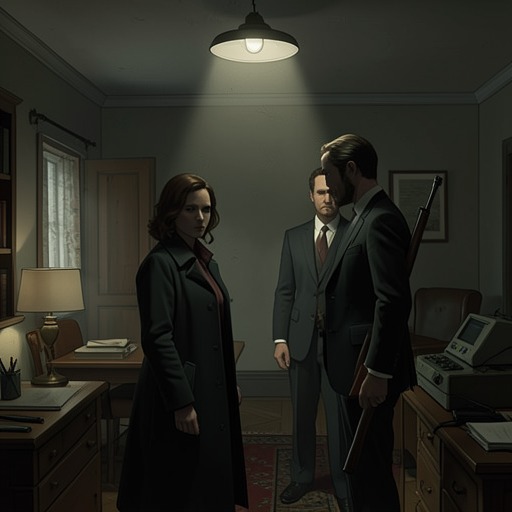
In the encounter with Will Robie, Sara keeps her gaze on her shoes and draws a can of Coors Light from her bag, opens it, and takes a drink. The small, deliberate gesture sits alongside her account of testifying and conveys little certainty about what she will reveal. Robie raises the possibility that, if her father did not kill Janet, someone else did, and asks whether Sara has any idea who. The question turns her from a grieving sister into a potential link in the murder investigation.
From Potential Witness to Target
Sara’s knowledge became important because her sister had left an unfinished trail of meetings and money. Emma Chisum told Will Robie that Janet had said she was going to meet someone on the night she died. Later, Victoria disclosed that she had been the person who was supposed to give Janet money, and that after Janet’s death she approached Sara with a story that their father might have killed her. Victoria said she urged Sara to leave town and offered to help her. The disclosures place Sara between two competing explanations for Janet’s murder: the accusation against their father, which had failed to produce a conviction, and the hidden connection between Janet and Victoria.
Sara’s contact with Robie also exposed how precarious and transactional her position had become. When he was surrounded, she called for him to come out and complained that he should have offered more than three hundred dollars. Her words indicate that she had taken money to help bring him in, while the nervous quaver in her voice complicates the note of triumph. She was not simply a source whom the investigation could protect or question at leisure; she was making choices under pressure, and the information she carried was entangled with immediate risks.
That opportunity ended when Robie and Jessica Reel found Sara dead on the left shoulder of the road, lying on her back in the short grass. The medical examiner identified a gunshot wound to her right temple; the bullet had not exited and remained in her body. The scene was not the clearing where the expected meeting was supposed to occur. Victoria later admitted that she had seen Sara in town and directed her to meet just off the road instead, adding that she had not known Robie and Reel would be present. Her confession makes Sara’s murder a deliberate silencing rather than an unresolved accident, and confirms that the promised help was part of the deception that brought her to the roadside.
Reel recognized the investigative cost as well as the human one: Sara had been their best chance to gain traction, but her unpleasantness did not make her killing deserved. Her death cuts off a living route into Janet’s case just as the concealed financial connection begins to emerge. It also turns the investigation toward a larger pattern: the Federal Bureau of Investigation was examining eight other killings across four states over nine years, and its investigators questioned whether the intervals between the deaths of young women and older men matched the pattern of Sara’s case. The pattern remained a question, not a settled conclusion, when Robie asked Victoria whether she had killed those other people.
The Truth Victoria Gave Sara
Victoria’s confession sharpened the difference between what Sara had learned from Janet and what Victoria later wanted her to believe. Janet had told her younger sister only part of the truth; Victoria acknowledged that she was the person who had been expected to give Janet money. But after Janet died, Victoria redirected Sara’s suspicion toward their father, suggesting that religious fervor might have made him kill. The accusation echoed the trial that had failed to convict him, while concealing Victoria’s own connection to Janet.
Victoria described her offer to help Sara leave town and build a better life as a pretense. Her contemptuous account reduced the relationship around Janet to older men and young women seeking money, then presented Sara’s killing as Victoria’s decision to end that arrangement. The revelation makes Sara more than a witness lost to the investigation: she was a young woman drawn into a false promise, given a calculated explanation of her sister’s death, and killed by the person who had positioned herself as her rescuer.
The Unanswered Pattern
Sara’s killing also became part of a wider, still-unresolved inquiry. A Federal Bureau of Investigation agent assigned to ViCAP told Will Robie that investigators were examining eight other killings across four states over nine years; Jessica Reel calculated that the other murders had occurred roughly eighteen months apart and asked whether the deaths of young women had been separated by long intervals from the killings of older men. The comparison framed Sara’s death as a possible link in a recurring pattern, not proof that the cases shared an offender. Even after Victoria admitted killing Sara, Robie still had to ask whether she had killed the other victims. Sara’s story thus ends with a stark distinction: the person responsible for her death is identified, while the broader pattern that made her a crucial investigative lead remains a question.